
A Q&A with Andy Mickelson, owner of Mickelson Plumbing & Heating, about how building owners and tenants quantify the value of smart pumps.
What’s your background?
I am just about ready to start my 28th year in this trade, helping commercial and residential clients in everything from apartment towers and office complexes to single-family homes.
For over 15 years, we have been using pumps with technology, whether they’re Electronically Commutated Motor (ECM), variable speed, or something of that nature. I’ve even worked directly with manufacturers as an early tester of new products to provide them with real-world feedback.
What situations are better for a smart pump than a traditional pump?
All of them. Every single job.
I could use a Permanent Split Capacitator (PSC) motor. They’re cheaper but I choose not to. We don’t install any PSC motors on anything unless I cannot physically get a smart pump to replace it. There are not really any places where I would say, “No, let’s not use an ECM motor here.” There’s an ECM motor or pump for almost every application from your smallest residential circulator to some of the largest commercial circulators.
Can you give us an example?
Let’s look at a large commercial pump like an older direct coupled ¾ horse pump that might take 11 or 15 amps of power at 240 volts. You’re looking at something like 2600 watts to run this thing nonstop. Because it doesn’t matter if you need a little heat or a lot, it’s the same power draw. We can retrofit you with an ECM pump that can do the same job at 175 watts.
There’s significant savings there. A building owner might say, “Why did this pump cost $3,000?” The answer is that it might save you $3,000 in the first heating season in western Montana. If we change out your entire bank of pumps, it could save your tenants thousands of dollars a year.
What projects would notice the biggest difference?
It’s mostly the apartment complexes that talk to me about the financial impact. I’ll call them up 2-3 years later to have a conversation and ask, “How are the power bills?” or ”How are things looking?” I had one customer who found it mind-boggling how much money the new heating system saves over the old one. They didn’t change anything about any of the apartments themselves. Because the utility bill has dropped, they can keep rents flat or even lower the rent for tenants to keep them happy.
For your standard residential customer, they’re not going to notice much right away. There’s no drop in performance. No extreme increase in performance in most cases, but overall their systems will cycle less frequently and have longer run cycles which improves system efficiency.
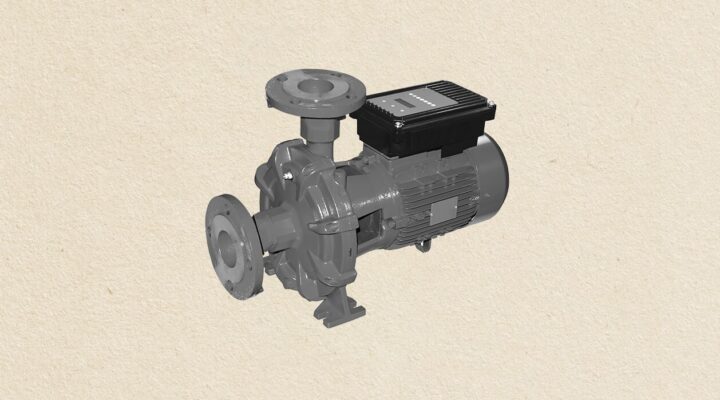
What challenges do you see for adoption?
Mostly it’s the fears and habits of contractors. They’re afraid of a customer callback, particularly a call they don’t know how to fix. They’re worried they’ll do the job, collect a paycheck, go home and then have the customer call them and say “my pressure doesn’t work like they expected.” Then they go back and look at this smart pump and feel like, ‘I don’t know what it’s doing. I don’t know what “auto-adapt” means. I don’t know what “learning mode” means.’
Unfortunately, this often results in switching the pump into manual mode and setting it to the max. I had one contractor in Salt Lake refer to that as “no callback mode.” Of course, that consumes the most energy, moves the most water, and wears the system out long term, but it means the customer never calls again.
What surprises do your customers see with smart pumps?
It’s probably the lifespan of all the other pieces of the system and the system itself. When you push hot water through the system too fast, it doesn’t transfer that heat the way it was designed. The water returning to the boiler is still too warm, which forces the boiler to slow down to avoid over-heating. It can only slow so far before it turns back on. Off and back on is one cycle.
If you’re over-pumping water, you can get short cycling and see upwards of a hundred cycles in a day, this is what leads to component failure and excessive fuel usage, but with a smart pump and proper system design, that number could be more like seven cycles in a day.
Every device we use has a rating, not in hours of runtime but in cycles of runtime. A gas valve rated for a million cycles will last many years longer without the short cycling. Systems as a whole often last 25% longer.
How have smart pumps changed your approach?
It almost feels like I’d be doing my customers a disservice by offering them a simpler traditional pump. So, I don’t give them the option anymore. I offer smart pumps every time.
Then, when I install them, there are a few simple settings that need to be made to ensure the pump is working properly. This may be setting the number of zones or the proper pressure settings for the pump to try to maintain. Many of these manufacturers have improved their instruction sheets and often include links to videos on how to properly set up their products.
Photo courtesy of www.mickelsonplumbing.com