Each quarter, BetterBricks shares updates and highlights of the transformative work accomplished by our Integrated Design Lab (IDL) network partners.

University of Idaho IDL
- The UI IDL began working with Blaine County, Idaho, on the planning of a microgrid project that will support essential services in the mountain communities of Sun Valley, Ketchum, Hailey, and Bellevue during extreme, grid-disrupting weather events. In support of the project, the lab will provide energy assessments of seven sites and identify potential efficiency upgrades that would lessen the load on this microgrid.
- The lab hosted a small roundtable discussion with representatives from Idaho Power and two local contractors on the challenges facing efficient residential heat pump installations in Idaho. This meeting confirmed many of the findings in NEEA’s recent HVAC Installation Contractor Market Research report. Some of the major barriers in Idaho include poor sizing of systems, over-use of electric resistance back-up, inadequate ductwork design, and poorly managed compressor lockouts. There was general agreement at the meeting on the need for increased contractor training and whole-home installation protocols to realize the potential savings from heat pump furnaces.

Montana State University IDL
- The MSU IDL communicated with Montana Department of Environmental Quality officials regarding the addition of advanced performance DOAS to the list of systems qualified for State Buildings Loans.
- The lab presented the case for using building performance evaluation as a design tool at the AIA Montana Conference in Helena, prepared a presentation on HRV operation in cold climates for the Cold Climate Conference in Bozeman, and will host a workshop on building performance evaluation tools for the local architecture community in November.
Learn more about the MSU IDL >

University of Oregon IHBE/Baker Lab
- The UO IDL recently finished developing the Hybrid Mass Timber and Steel Diaphragm Carbon Tool, which was designed to support the evaluation of embodied carbon implications associated with hybrid steel and mass timber floor systems. Slated for public release in the coming weeks, the tool is designed to help designers, engineers, researchers, and industry professionals evaluate environmental trade-offs among alternative floor assembly configurations during predesign, schematic design, and design development.
- To address the difficulty of integrating electrical, lighting, plumbing, and HVAC components into panelized wood construction systems, the lab recently completed a full-scale prototype section model to explore creative and cost-effective solutions that create cavity space on the interior of a panelized wall system and expose the biophilic appearance of wood as much as possible.
- The next iteration of the mass plywood panel (MPP) affordable housing prototype is currently under construction, representing an important step to learn more about the construction process and potential issues and frictions that could affect construction schedules and costs. As the MPP 2.0 prototype nears completion, the lab is gearing up to install monitoring equipment to confirm expected performance of the MPP house design, with monitoring including moisture, infiltration, acoustics, and an onsite weather station.

University of Washington IDL
- The UW IDL presented a paper at the ACEEE conference authored by directors of each of the five IDLs. Titled Mapping the Influence of a Network: long-term market transformation through mentorship in Integrated Design, the paper outlines the labs’ mentorship mission to help interns learn and apply strategies for energy-efficient building design and operation.
- The lab is partnering with the national American Institute of Architects to expand their ROI web series. With an emphasis on high-performance buildings and design for resilience, the project will update the AIA’s existing web content with new material to fill gaps and to expand and strengthen it where new evidence, tools, or methods are identified. This work is intended for architect members to use in conversation with their clients, potential clients, civic leaders, vendors, contractors and other architects, helping demonstrate that architects are trusted partners in strengthening society, designing solutions, and transforming the health and well-being of communities.
- Led by the lab, the Pacific Northwest Building Training and Assessment Center (PNW BTAC) combines hands-on and virtual building audit training and creates technical roadmaps for regional building owners. To date, 52 students have participated in building assessment training across more than five building sites and over 1,000 hours of onsite student assessment activities. Thirty students have qualified for the PNW Building Assessment Certificate, and the project’s outreach has resulted in the successful recruitment of fourteen PNW BTAC training sites.
- The lab led a panel discussion at the 2026 ASHRAE Building Decarbonization Conference in Seattle outlining tools and methods for energy efficiency and decarbonization from small-scale residential to healthcare. Topics included balancing operational and embodied carbon, evaluating cost-effective retrofit pathways that improve energy performance and occupant comfort, and identifying strategies for healthcare electrification and efficiency while maintaining reliability and patient safety. The presentations highlighted accessible, evidence-based approaches to reducing emissions, meeting emerging Building Performance Standards, and creating healthier, more resilient, high-performance buildings.
- The lab presented at the Greenbuild International Conference in Los Angeles, sharing research findings on effectiveness of various passive design mitigation strategies during extreme heat events in multifamily apartment buildings.

Washington State University ID+CL
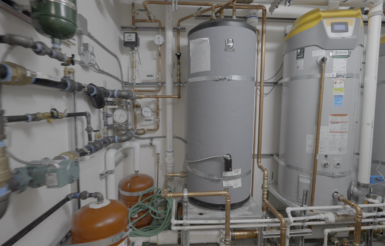
- The WSU IDL completed a podcast and companion resource featuring the HVAC systems at WSU’s Schweitzer Engineering Hall (SEH). Combining building design and operations perspectives, the resources explore connections among energy efficiency, ventilation, indoor air quality, and occupant comfort. The lab also advanced coordination with WSU Facilities for a future SEH building tour, creating another opportunity to connect high-performance HVAC concepts with an operating campus building.
- The lab secured funding from WSU Facilities to relaunch its Energy + Comfort Campaign, building on the campaign’s combination of occupant engagement, energy education, and smart power strips to reduce unnecessary plug loads while supporting comfortable campus spaces. Planned activities include refreshed training and conservation messaging, engagement in additional campus buildings, and coordination with facilities to connect occupant actions with building operations. This renewed investment supports practical energy conservation while providing students with applied experience in building performance and occupant engagement.
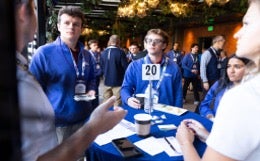
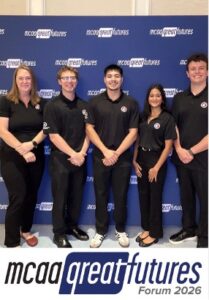
- Following participation in September’s MCAA GreatFutures Forum in St. Louis, WSU students, led by lab director, Julia Day, began preparing for a national competition centered on a cogeneration facility in Nebraska. These events connect students with industry partners, mechanical contractors, and energy service companies, bringing classroom concepts into real-world applications and preparing the workforce responsible for delivering energy-efficient mechanical systems.