Project Overview
High-performance building practices sharpen competitive edge while enhancing occupant quality of life
Seattle-based real estate firm Unico Properties has long held sustainability as a cornerstone of their business philosophy. For Unico, whole-building efficiency is a resilient and attractive investment not only because it promotes human and environmental health, but also because it delivers long-term value by differentiating their business from the competition. They understand that sustainable practices increase tenant satisfaction by reducing operational costs, minimizing the risk of utility price fluctuations, and enhancing the comfort and health of indoor spaces.
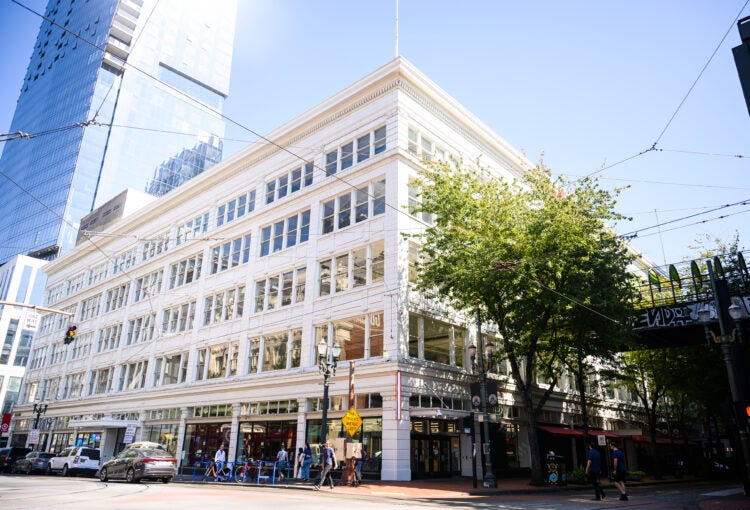
After acquiring downtown Portland’s iconic Galleria building, Unico recognized the opportunity to modernize the building’s interworking systems and create a high-quality space aligned with both tenant expectations and their sustainability standards. With the 1910 five-story building presenting an opportunity for modernization and enhancement, Unico knew they could leverage LEED certification standards and whole-building efficiency strategies—as well as incentives from Energy Trust of Oregon—to reposition the Galleria as a premier property.
Unico focused on how each element of the building works together to elevate the entire building’s performance, prioritizing efficient systems and strategic envelope improvements. The Galleria building is now a paragon of efficiency designed to do three things: achieve an Energy Use Intensity 80% lower than a typical modern building in the U.S., meet Energy Trust of Oregon’s Path to Net Zero status, and earn LEED v4 Core & Shell Platinum and Fitwel 2-Star certifications.
Whole-building efficiency: Greater than the sum of its parts
Unico incorporated a variety of technologies and strategies to revitalize the Galleria building. While each of the elements listed below improves the building’s performance on its own, together they unlock a new level of whole-building efficiency and reduce the overall building energy load.
-
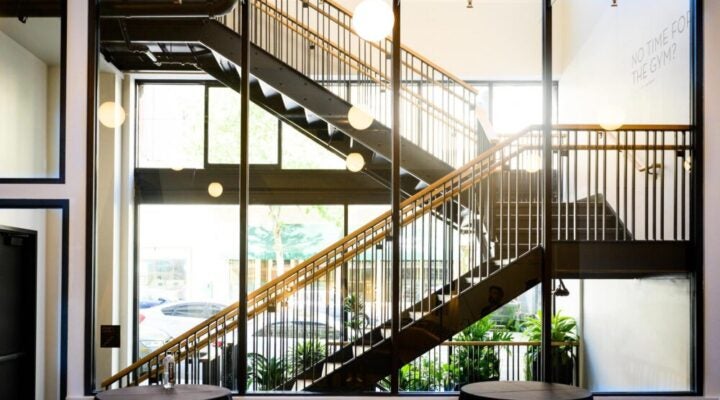
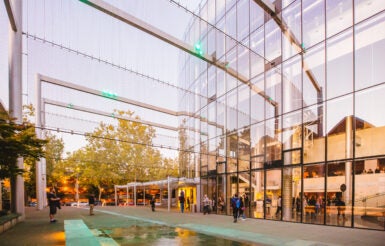
New daylit lobby and high-efficiency lighting
Protective glazing brings in natural light to illuminate the stairwell and lobby, while advanced lighting fixtures maximize daylight harvesting and employ occupancy controls to minimize energy waste.
-
Roof insulation and operable secondary window inserts
Both upgrades improve building insulation to reduce the heating/cooling load requirements, allowing for a down-sized HVAC system. The operable secondary window inserts in completed tenant spaces maintain the building’s historic aesthetic without sacrificing envelope performance. When combined with the lighting upgrade, the new windows further increase the use of natural daylight, improving tenant well-being and productivity.
-
Advanced performance DOAS
The advanced performance dedicated outdoor air system (DOAS) pairs the highest performance HVAC equipment (such as heat recovery ventilators) and design techniques (such as separating heating/cooling air from ventilation air) to significantly reduce HVAC energy use and provide cleaner, safer indoor air throughout the building. The building’s advanced sensors integrate with the advanced performance DOAS to ensure that heating and cooling air is only distributed where it’s needed.
-
Advanced energy information system and air quality sensors
Provides real-time insight into energy use, occupancy levels, and indoor/outdoor air quality to enhance efficiency and tenant comfort. In addition to distributing heating and cooling air efficiently throughout the space, the sensors further enhance indoor air quality by increasing ventilation when indoor/outdoor air quality is suboptimal.
-
Community Solar
Galleria’s subscription to Community Solar saves energy costs and supports the local energy infrastructure.
Paving the path to high performance
To raise the bar of energy-efficient design and performance throughout the state, Energy Trust of Oregon offers cash incentives and resources for ambitious projects like the Galleria building. By meeting the target Energy Use Index of 29 kBtu per sq. ft. per year, Unico maximized available Energy Trust of Oregon incentives to help offset the costs of Galleria’s whole-building upgrades.
“Energy Trust of Oregon’s Path to Net Zero program aligns with our company vision and sustainability goals,” said Ty Barker, Vice President Real Estate Services, Unico. “With incentive opportunities like this and increasingly elevated regulatory standards, it just makes good business sense to stay ahead of state energy codes and take a whole-building approach to design.”
Healthy, happy tenants are good business
Unico conducts business with an understanding that high-quality tenants are attracted by sustainable design that delivers better thermal comfort and reduced viral risk to tenants.
“Healthy and comfortable environments contribute to occupant well-being and productivity, which directly supports their business success,” said Anita Jeerage, Vice President Sustainability & ESG, Unico. “This makes our properties more desirable and cultivates long-term relationships. That’s why we seek out certifications from organizations like LEED and Fitwel—to ensure we’re providing our tenants with the very best air quality, comfort, and active design features.”
With tenant comfort as a guiding light in their decision-making, Unico was able to transform a historic building into a high-performing, occupant-friendly space. And by using the latest whole-building efficiency design principles and technologies, they were able to preserve and modernize one of downtown Portland’s landmark buildings at the same time.
Project partners:
SERA Architects
Walen Construction
Fortis Construction
Ecotope
Related Case Studies
Lighting the way: Mount Vernon’s brighter, smarter library
A backstage transformation in light and efficiency