Photo credit: HKP Architects/DPdrones
Project Overview
A shift to flexible lighting empowers community-driven design
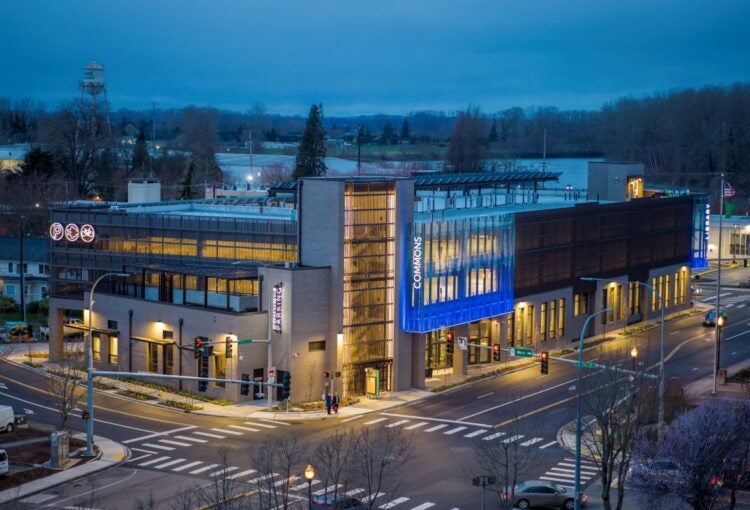
When the city of Mount Vernon began designing its new library, public feedback led the conversation. Residents wanted not just a library, but a community center complete with gathering spaces, a commercial kitchen, and public restrooms. The final design of Mount Vernon Library Commons also includes a dedicated area for seniors, EV charging in the parking garage, and convenient access to
public transit.
“Our primary mission is to empower the people in our community through self-directed learning,” said Isaac Huffman, Library Director of Mount Vernon Library Commons. “We do that through providing a safe space, offering resources, and giving hands-on help to individuals to reach those goals.”
A major part of delivering that vision is lighting. The previous library was a template for what needed to change, starting with the harsh, bright lights. Huffman worked with HKP Architects, TFWB Engineers, and Dark Light Design to create a more welcoming and comfortable environment, focused on more natural light in the design.
Together, the team designed the library with over 600 light fixtures, almost all including luminaire level lighting controls (LLLC). The system’s wireless design made installation and commissioning quick and efficient.
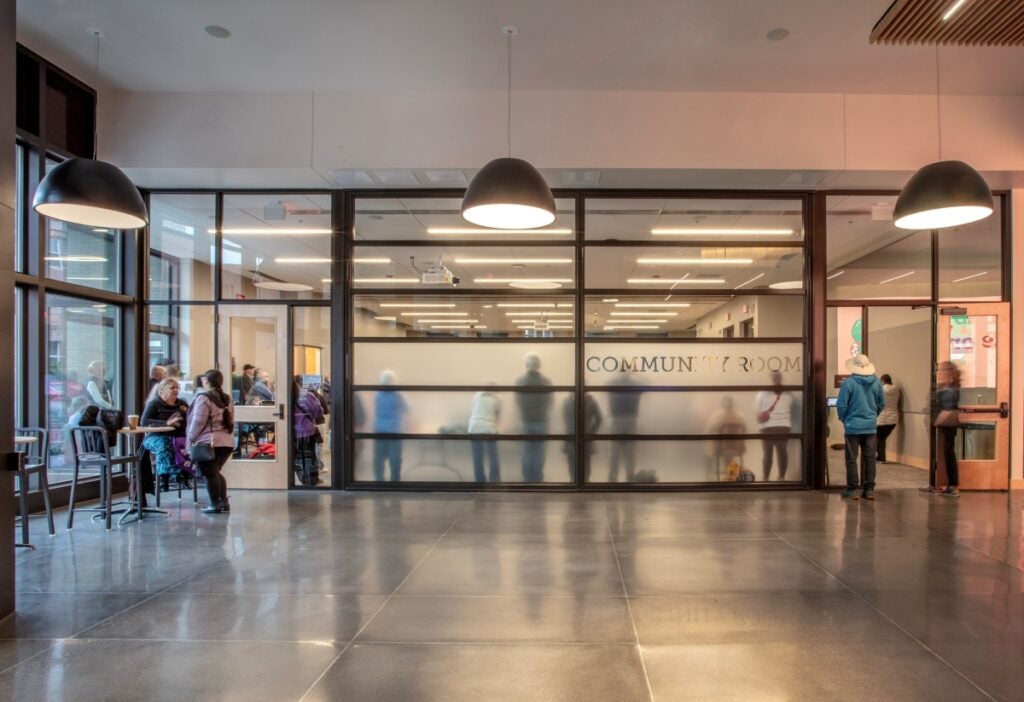
Photo credit: HKP Architects/Leslie Schwartz Photography
Easy-to-use controls are providing major energy savings
One of the major priorities for the project was to rely more on natural light through daylight harvesting. The new LLLC system can automatically adjust the light levels according to how much daylight is offered through the library’s sweeping 14-foot windows. LLLC also incorporated occupancy sensing in which lights turn on when someone enters a space—providing safety in dark areas of the library or in the parking garage. By limiting the number of hours the lights are on, these features provide significant energy savings, with LLLC operating up to 70% more efficiently than standard fluorescent fixtures.
“LLLC is dimmable, which is great for community spaces like this with a lot of variability,” said Taylor Pitts, Senior Management Engineer at Puget Sound Energy. “You can have a higher light level for somebody in a reading space or a lower light level for someone using a computer. With LLLC, you can tailor the lighting to the needs of the space, creating a more comfortable environment with a much nicer feel that people genuinely enjoy being in.”
When it came to programming, Huffman and his team needed time to learn the system, but once they did, they found the controls to be flexible and easy to fine-tune.
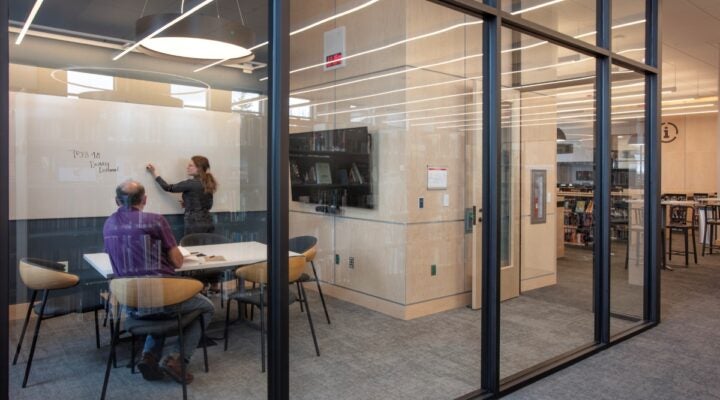
Photo credit: HKP Architects/Leslie Schwartz Photography
“We have a desktop interface and a phone app to control the system,” said Huffman. “We’ve created new lighting profiles and new occupancy guidelines, and it’s as simple as making a few adjustments in the app. You have settings you can use for weeks or months at a time very effectively.”
The project also received a whole-building incentive from Puget Sound Energy to help offset the cost of the $61-million project.
The benefits of LLLC are impacting a community for good
The library has received overwhelmingly positive feedback, from staff enjoying the simple ability to customize their lighting to teens checking out more books than ever before. “It was rewarding to work with the city and create a building that’s going to be a showcase for sustainability in our community,” said Julie Blazek, Partner at HKP Architects. “Everybody loves the spaces and how comfortable they are and continues to use them again and again.”
Thanks to LLLC, the library combines comfort, natural light, and energy efficiency in a space that people genuinely enjoy and will continue to use for years to come.
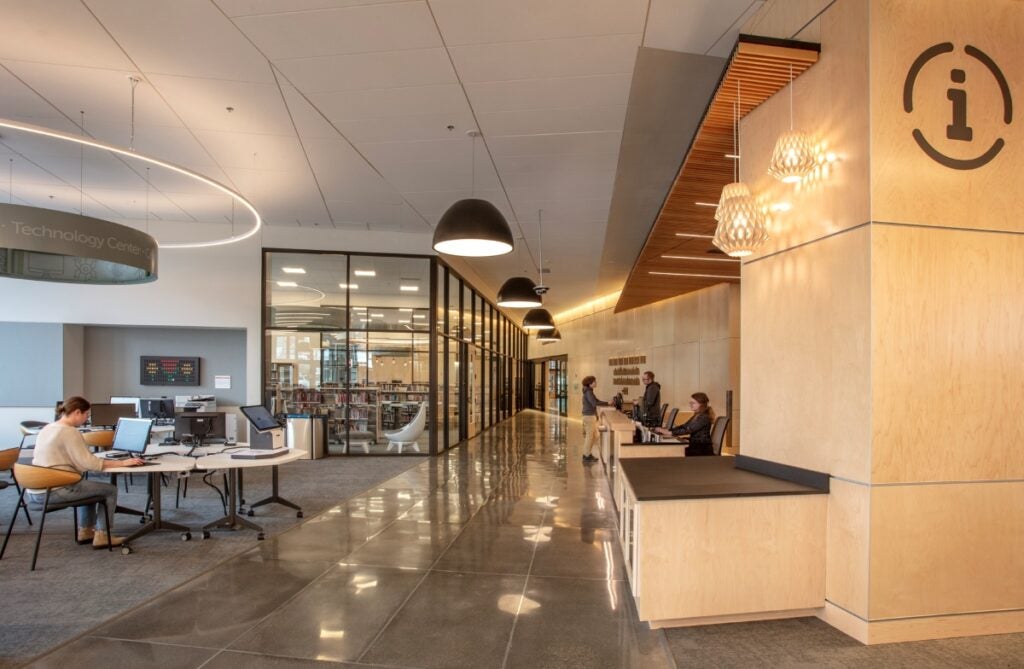
Photo credit: HKP Architects/Leslie Schwartz Photography
Key LLLC Takeaways
Here are some tips to help you successfully implement LLLC in your next lighting upgrade.
-
Plan for training
Allow ample time for training staff, building owners, and facility managers on how to navigate lighting controls on the app and control interfaces. Proper training sets them up for success and reduces the potential for callbacks.
-
Understand utility incentives
Review current utility programs for new construction and retrofit projects. Your local utility can guide you through their incentive programs and connect you with lighting specialists.
Related Case Studies
A backstage transformation in light and efficiency
Simplicity, flexibility, and savings for Fluke Corporation