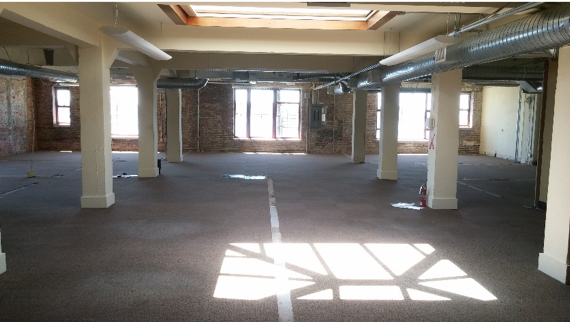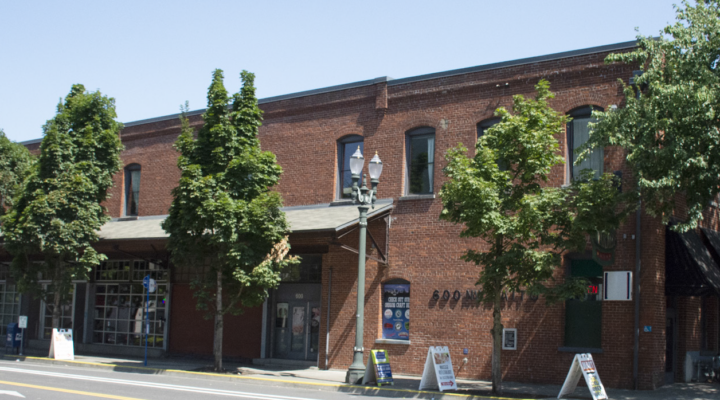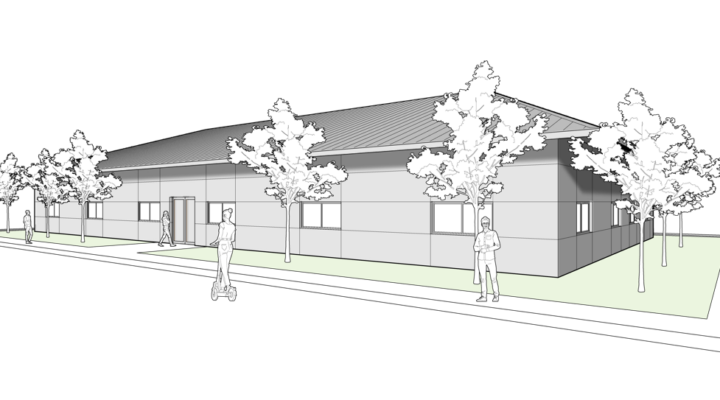
Using comparative data based on energy models, along with real-world performance data and product costs, this modeled case study illustrates the pros and cons when considering replacing an aging HVAC system with either a code-minimum rooftop unit (RTU) or an all-electric advanced performance dedicated outside air system (DOAS).
| Example building profile | |
|---|---|
| Type: | 1-floor office building |
| Project type: | Major renovation |
| Location: | Portland, OR / climate zone 4C (mixed marine) |
| Size: | 5,500 sq. ft. |
| Year built: | 1995 |
Case study scenario
A small business owner recently purchased a 5,500 sq. ft. building and intends to renovate the interior spaces to accommodate their office needs, in addition to preparing a few offices to rent out. While they value sustainability, energy efficiency, and indoor environmental quality, they would also like to keep project costs as low as possible.
| System comparison | Like-for-like replacement (Oregon code minimum) | Advanced performance DOAS |
|---|---|---|
| System design | (2) 6-ton packaged single-zone RTUs | (1) 10-ton high-performance VRF with (11) indoor units (1) 1000 cfm heat recovery ventilator (82% sensible effectiveness) |
| Full system cost (install, equipment, permitting) per sq. ft.1 | $60.34 | $78.65 |
| HVAC / whole-building EUI (kBtu/sq. ft./yr)2 | 28.9 / 52.3 | 8.2 / 31.5 |
| Annual energy costs ($0.09/kWh) | $7,583 | $4,573 (40% reduction) |
| Rent increase potential to cover incremental cost | n/a | $1.85/sq.ft./yr. |
| Carbon emissions (lbs/yr CO2_e)3 | 128,467 | 77,468 (40% reduction) |
| Air quality | Fully recirculated, semi-filtered air with coupled ventilation | • Fully decoupled heating/cooling and ventilation • MERV-13 filtered air with no recirculation delivered directly to the space |
| Control | 2 thermal zones (interior and perimeter with limited control) | 11 thermal zones (individualized control for each unique workspace) |
| Building performance standards and energy programs | n/a | • Helps prepare for forthcoming standards requirements • Potential incentives available |
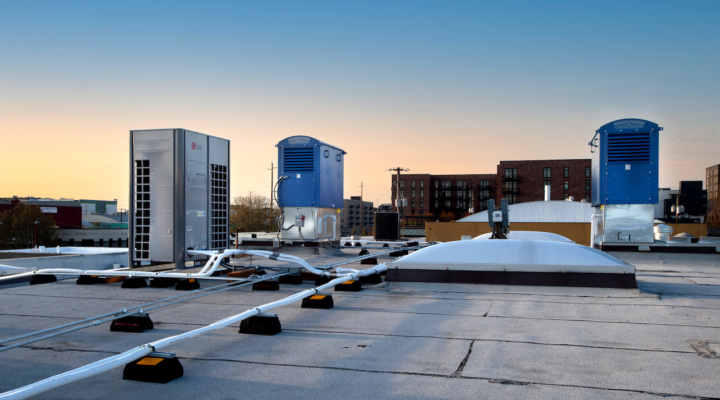
Added value for the cost
In this scenario, the building owner must weigh the higher upfront system cost with the additional value provided by the higher performance HVAC solution, including:
- Enhanced controls and superior thermal comfort, including 11 distinct thermal zones for optimal, individualized control over each unique workspace and advanced system controls resulting in ease of operation, improved comfort, and optimal humidity levels.
- Enhanced indoor air quality from 100% outside air delivery with no recirculation between spaces. Improved indoor air quality is proven to increase health, productivity, creative thinking, and employee performance by decreasing harmful CO2 levels and viral spread.
- Higher rent premiums and tenant retention, by providing elevated comfort and indoor air quality which has the potential to increase rental income by up to $2/sq. ft. per year while decreasing operational costs for the tenant.
- Meeting sustainability and carbon reduction goals, and staying ahead of local building performance standards requirements.
1 System costs are based on the average of two actual estimates solicited from design build mechanical contractors in 2024.
2 Red Car Analytics, Economic Analysis of Heat Recovery Equipment in Commercial Dedicated Outside Air Systems, 2019.
3 Environmental Protection Agency, eGRID2022, subregion WECC Northwest.