
A Q&A with Adam Lopez, Lighting Project Manager at Christenson Electric, and his tips for successfully installing luminaire level lighting controls (LLLC)
Can you introduce yourself and explain your role at Christenson Electric?
I started at Christenson Electric as an account manager, focused on sales. Lighting technology was rapidly evolving, so I started learning everything I possibly could about it. Now, as a project manager, I oversee our lighting crew and technicians, handle quotations, manage design build and control layouts, and conduct photometric analysis and job walks.
How did you come to discover LLLC?
I first learned about it eight years ago, at a utility meeting and then at a training on commercial lighting. At the time, LLLC was very new, and it was harder to sell because of cost and commissioning. But in the past few years, the technology has evolved, making installation and programming much easier.
Can you tell us more about the LLLC installation process?
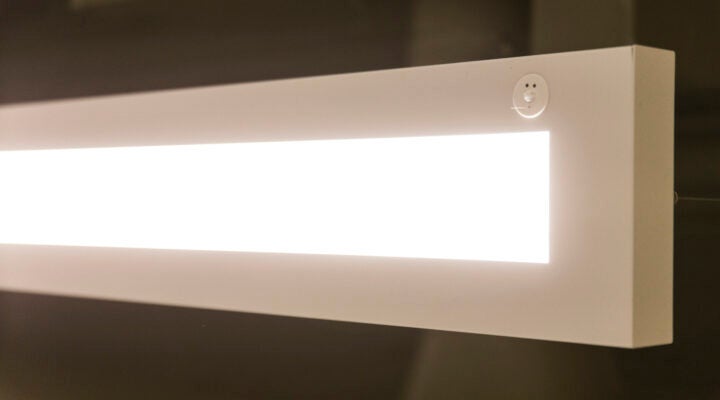
From an installation standpoint, one of LLLC’s benefits is the lack of wires and complex systems, which leads to labor savings. Instead of planning out how many sensors or devices are needed, everything is built into the fixture. For commissioning and programming, the process depends on the specific needs of the project.
At Christenson, we use a checklist to confirm how the customer wants their system set up and then program everything based on those preferences. Smaller projects can often be commissioned in just an hour or two, while larger or harder-to-access spaces may take a couple of days, or require commissioning fixtures as they are installed.
What LLLC features do you use the most in your projects?
One of the features we use the most is high-end trim, which is the ability to set a lower maximum dimming level for a fixture so it never operates at full brightness. This reduces energy use and helps create a more comfortable lighting environment. Back in the day, you would need to either install dimming controls or send the fixture back to the manufacturer to reprogram them and then reinstall everything. With LLLC, we can simply reprogram each fixture to any light setting we need.
Another feature we use often is reconfiguration. There have been some projects where the tenant has added a new wall and—thanks to the flexibility of LLLC—no new wires are required. We can simply take that fixture from its original group and put it into a new group using a wall switch. It streamlines installation and makes adapting to tenant needs much easier.
Are there any recent LLLC-based projects that stand out to you?
We worked on a large manufacturing facility that operated 24/7 with fluorescent lighting. Reducing electricity costs was a major priority, so we worked with the electrical engineer to start testing some areas with LLLC. It’s now installed in about three quarters of the facility and we are adding more.
While the installation has been complex—ranging from simple office retrofits to custom lights over manufacturing equipment—the end result is undeniable. The spaces look incredible, and many fixtures have high-end trim. They’re projected to save about three quarters of a million dollars per year in energy costs, and upfront utility rebates helped them reinvest those savings into other programs.
How do you ensure success post-installation with facility managers and building owners?
Our mission at Christenson is creating long-term relationships through trust and performance, so we make sure our customers feel supported well beyond installation. When we hand over a lighting system, we emphasize how LLLC is future-proof with user-friendly software and an app that makes it simple to adjust settings. LLLC offers countless possibilities with its integrated sensors and fixtures, and firmware updates can add new capabilities over time, allowing your system to do more than it could at installation.
Customers receive a standard one-year warranty, during which we handle any questions or adjustments, from general system tweaks to customizing light levels for individual employee needs. At the end of that year, we train and transition the system to the facility team, unless they prefer us to keep managing updates for them.
What advice do you have for installers who are newer to LLLC?
My biggest piece of advice is to really familiarize yourself with the product. Attend trainings, spend time learning the software, and talk to your suppliers. The more you understand what you are installing, the smoother the process will be. Even if the manufacturer handles commissioning, your customers will still have questions, and you want to be able to answer them confidently.
Another important thing to keep in mind is that not all LLLC systems are the same. Just because something is the cheapest option doesn’t mean it’s the best fit for the customer. Different manufacturers offer different capabilities, so it’s important to listen closely to what your customer needs and make sure the system you choose can actually deliver on those expectations. And finally, lean on your utility partners and rebate programs when you can—they’re a great resource for navigating incentives and helping projects come to fruition.
Case Studies
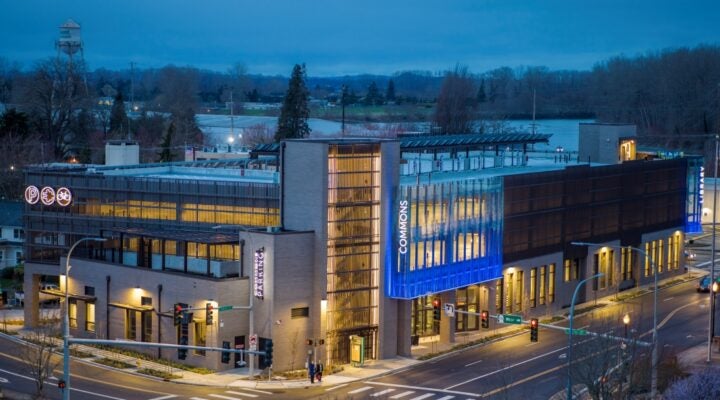
Lighting the way: Mount Vernon’s brighter, smarter library
A backstage transformation in light and efficiency

LLLC brings bright future and futureproofs investment to Everett warehouse