Ryan Peterson, CEO of West Ridge Energy, installs luminaire level lighting controls (LLLC) to help building owners move beyond basic LED upgrades and support long-term flexibility.
In this Q&A, Ryan discusses common misconceptions about lighting controls, shares real-world project examples, and explains how LLLC simplifies installation while supporting evolving energy goals.
Can you introduce yourself and your company?
My name is Ryan Peterson, and I run West Ridge Energy with my business partner, Noah Ripley. It’s a smaller company so I wear a lot of different hats. I’d say “owner and operator” fits what I do best.
After earning my degree in Energy Policy from Western Washington University, I started in lighting sales where I learned the ins and outs of lighting systems. I saw the industry shifting from traditional fluorescents to LED retrofits, then toward LEDs with controls—particularly LLLC. That transition inspired me and Noah to start our own company to focus on LLLC and broader energy efficiency services like audits.
West Ridge Energy manages projects across Idaho, Oregon, and Washington. Noah and I oversee sales, project management, and large-scale installations while helping clients navigate utility incentives and maximize their energy savings.
Why do you see LLLC as the next standard?
At this point, the biggest savings don’t come from more efficient LEDs. They come from lights being off or dimmed when they don’t need to be on. LLLC makes that possible in a very granular way.
They’re networked, groupable, and fully programmable. You can control one fixture or a hundred at once. You can dim instead of shut off, which improves comfort and safety, and you can easily reprogram the system as the space changes. That flexibility matters a lot.
What LLLC features do you use the most?
One feature our customers really value is occupancy task tuning, which lets them tailor light levels for different areas within a space—whether it’s an open office, a production floor, or a warehouse. For example, in manufacturing environments, they can program one zone of lights to remain on for worker safety while another zone uses occupancy sensing to save energy.
Another useful feature is dimming, where we can reduce light levels to around 50%. Most occupants don’t even notice the difference, yet LLLC delivers meaningful energy savings. And then there’s daylight harvesting, which automatically adjusts lighting based on the amount of natural light available.
How do you address common negative perceptions of lighting controls?
Most of that comes from bad experiences with older sensor technology like bathroom lights turning off at the worst possible time. Those systems were often poorly placed and conservatively programmed by electricians who didn’t want callbacks.
With a well-designed LLLC system, you might not even notice the controls are there. The lights dim subtly, stay on where people are working, and respond naturally to both occupancy and daylight. The goal is really for people to stop having to worry about the lighting entirely.
Can you share a project that showcases these LLLC benefits?
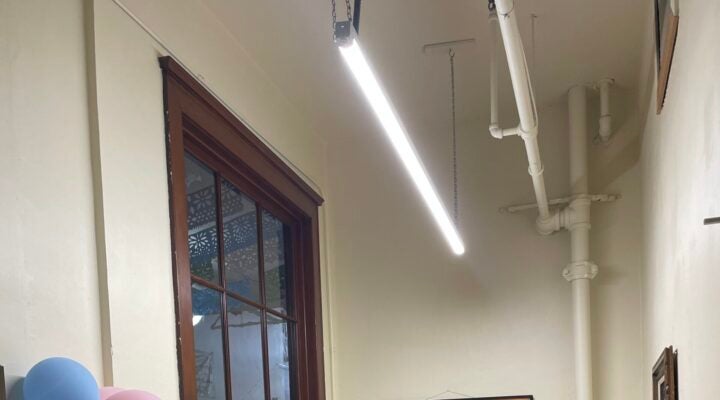
El Centro de la Raza in Seattle is a great example. It’s a nonprofit operating out of a century-old building with a wide mix of spaces, including a preschool, daycare, food bank, and other community areas. Each space had different lighting needs, and an LLLC upgrade gave them the flexibility to adjust lighting as needed while also reducing the frequent maintenance issues they were dealing with before.
It was fun to go around asking each space what they wanted and being able to make everyone happy through adjustments. The dimming functionality has proven to be a major benefit for staff, as they can adjust light levels and make the space more comfortable – especially for kids who are sensitive to light.
Seattle City Light incentives covered more than half of the costs of this project, helping the organization significantly reduce its energy use while upgrading to a better lighting system.
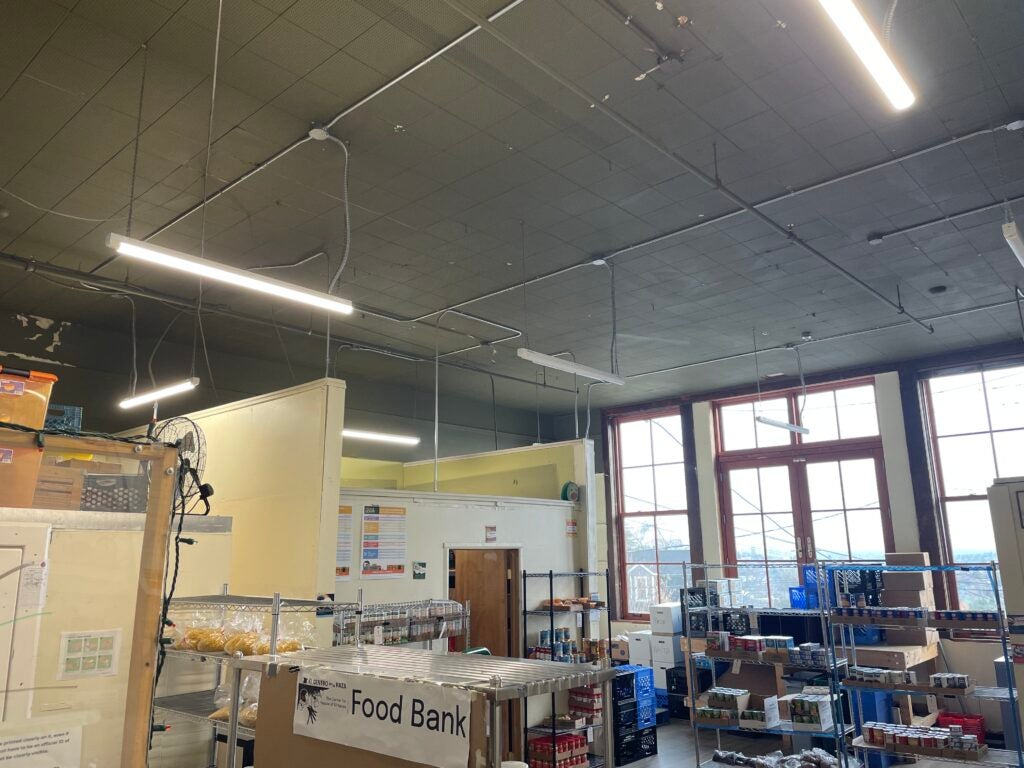
The food bank at El Centro de la Raza
What is a typical LLLC installation experience like for your customers?
For most customers, the installation feels very similar to a standard lighting upgrade. Fixtures are swapped out, and because the LLLC controls are built into the fixture, there’s usually less extra wiring and fewer added components than traditional control systems.
The real difference comes after installation. We walk the space with the customer, fine-tune light levels, and adjust settings based on how they actually use the building. That post-install tuning is really where the system becomes personalized and where any concerns about controls disappear. It’s great to see that “aha moment” when they understand how flexible and customizable these systems are.
What advice would you give to installers who are newer to LLLC?
I really think controls are here to stay. Most buildings already have LEDs, but they don’t have sensors, daylight harvesting, or the flexibility to adapt as things change. LLLC lets you keep finding savings without having to do another full lighting upgrade.
In Washington, that flexibility especially matters because of the Clean Buildings program. A lot of owners are looking at those energy targets and realizing they’re right on the edge. Installing an LLLC system not only gives you the most efficient lighting option available, but it also provides long-term flexibility in meeting those targets. Instead, they can reassess how their lighting is programmed and adjust controls to further reduce energy use without additional cost.
Lastly, when it comes to talking about costs with your customers, I always fold incentives and savings into the conversation from the start. I use utility standards for energy reduction by space type, so customers can see this isn’t a guess. When they see higher incentives, higher savings, and a faster payback, the upfront cost usually stops being the main concern. And on top of that, they’re getting a system that can adapt to future code, rate increases, or changes in how the building is used.
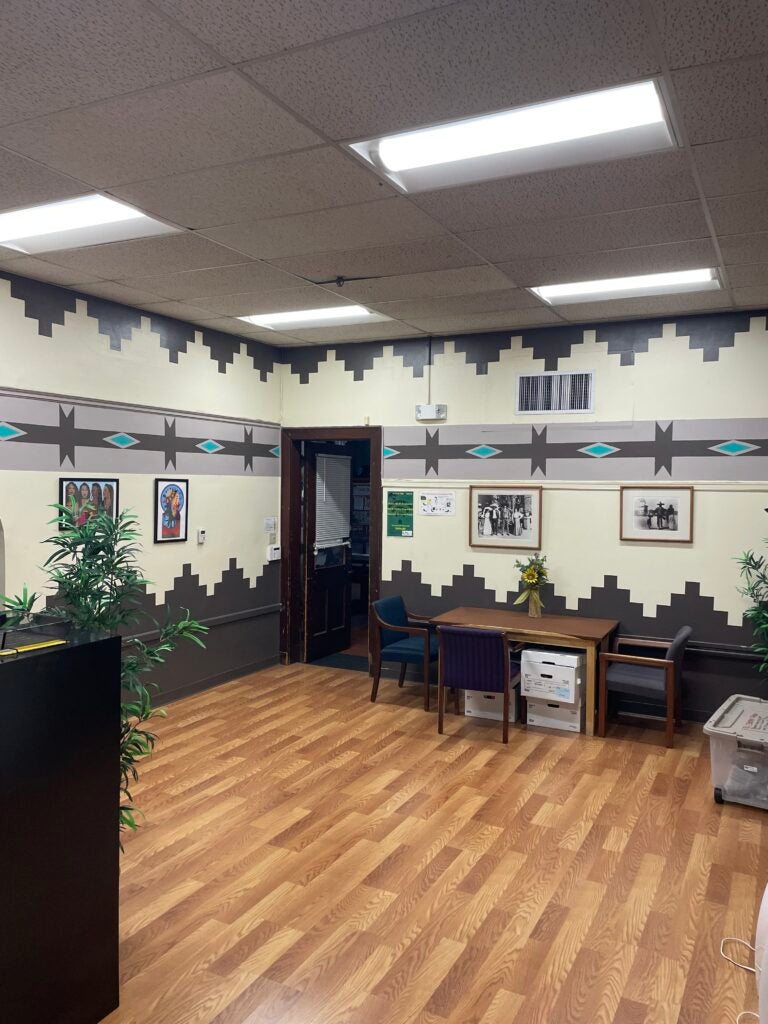
El Centro de la Raza
Case studies
‘It Makes Sense’: How LLLC Pays for Itself Financially and Environmentally at a Manufacturing Plant
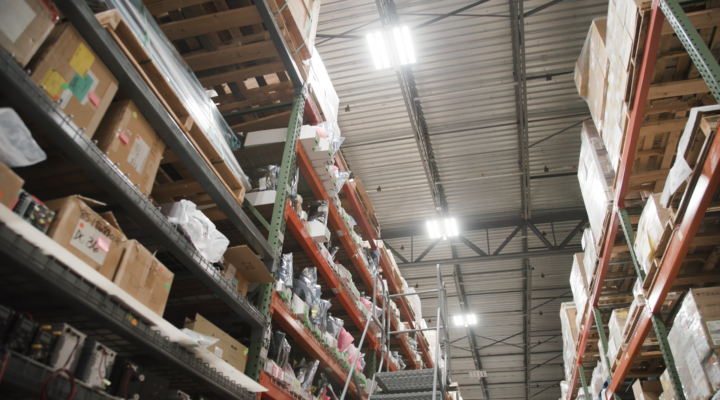
Lighting the way: Mount Vernon’s brighter, smarter library
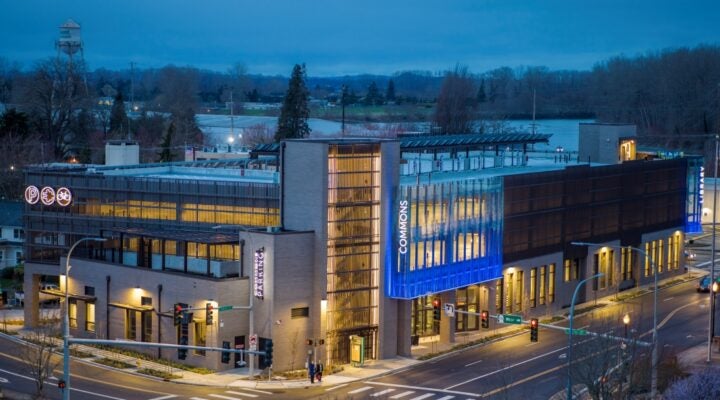
Ease of installation, energy savings make LLLC the smart choice for Enumclaw High School