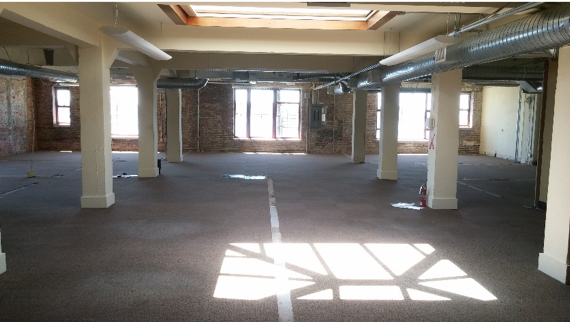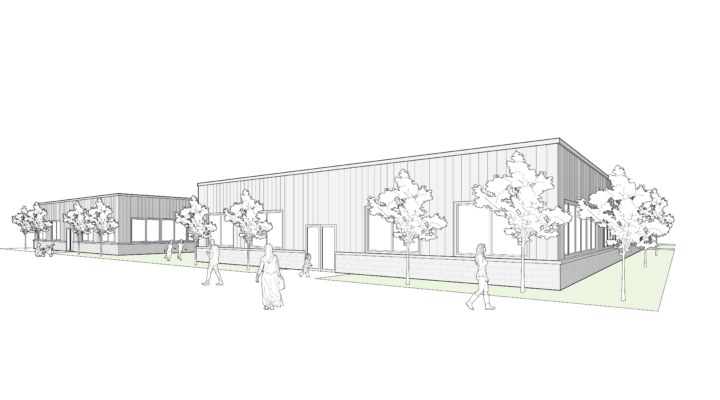
Using comparative data based on energy models, along with real-world performance data and product costs, this modeled case study illustrates the the pros and cons of different HVAC options when upgrading a typical small, Northwest school.
| Example building profile | |
|---|---|
| Type: | 1-floor primary school |
| Project type: | New construction |
| Location: | Bend, OR / climate zone 5B (cold dry) |
| Size: | 24,400 sq. ft. |
| Year built: | 2026 |
Case study scenario
A new 24,400 sq. ft. elementary school is being built in Bend, Ore. The school district values sustainability and healthy learning environments and is considering pursuing LEED certification for the building. The design team is considering two HVAC options: 1) packaged heat pump rooftop units (RTUs), and 2) an advanced performance dedicated outside air system (DOAS) with heat recovery ventilators (HRVs) and a variable refrigerant flow (VRF) system.
| System comparison | Packaged heat pump RTUs | Advanced performance DOAS |
|---|---|---|
| System design | (3) 22-ton packaged heat pump RTUs | 48-ton1 high performance VRF system with (17) indoor units (2) 3000 cfm HRVs (82% sensible effectiveness) |
| Full system cost (install, equipment, permitting) per sq. ft.2 | $40.84 | $53.01 |
| HVAC / whole-building EUI (kBtu/sq. ft./yr)3 | 47.3 / 78.6 | 14.0 / 45.3 |
| Annual energy costs ($0.12 kWh) | $67,433 | $38,857 (42% reduction) |
| Carbon emissions (lbs/yr CO2_e)4 | 856,796 | 493,710 (42% HVAC reduction) |
| Air quality | Fully recirculated, semi-filtered air with coupled ventilation | • Fully decoupled heating/cooling and ventilation • MERV-13 filtered air with no recirculation delivered directly to the space |
| Control | 3 thermal zones that group several classrooms into each | 17 thermal zones (individualized control for each classroom and admin space) |
| Building performance standards and energy programs | n/a | • Meets LEED enhanced ventilation credit • Potential incentives available |
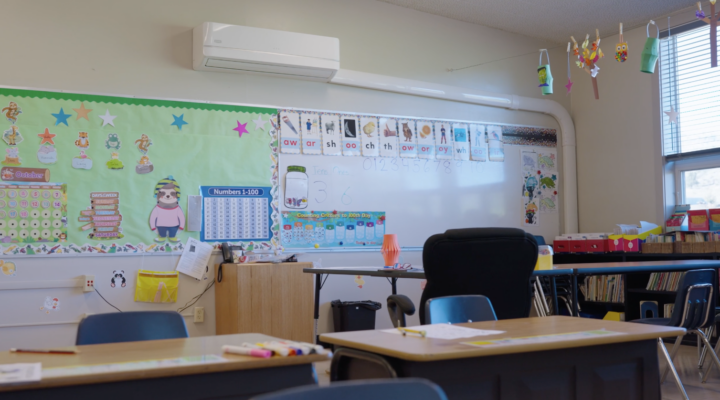
Added value for the cost
In this scenario, the design team and school district must weigh the higher upfront system cost with the additional value provided by the advanced performance HVAC solution, including:
- Enhanced indoor air quality (IAQ) from 100% outside air with no recirculation between spaces, delivering cleaner air with consistent ventilation and more comfortable temperatures. Improved IAQ is also proven to reduce absenteeism and increase productivity, creative thinking, and performance by decreasing harmful CO2 levels.
- Superior health and wellness. Poor IAQ further affects how children’s bodies and brains develop, with impacts including out-of-balance immune response, diminished lung function, and disrupted brain development.5
- Meeting sustainability and carbon reduction goals, including meeting the LEED enhanced ventilation credit (120% of code-minimum ventilation rate) with minimal energy impact due to exhaust air energy recovery.
- Enhanced controls and superior thermal comfort, including 17 distinct thermal zones for optimal, individualized control over each unique classroom and administrative office. The advanced system controls result in ease of operation, improved comfort, and optimal humidity levels.
1 The high level of heat recovery provided by the HRV and the superior extreme weather heating/cooling performance allows for the system to be right-sized at 48-tons of nominal capacity instead of the 66-ton RTU system.
2 System costs are based on the average of two actual estimates solicited from design build mechanical contractors in 2024.
3 Red Car Analytics, Economic Analysis of Heat Recovery Equipment in Commercial Dedicated Outside Air Systems, 2019.
4 Environmental Protection Agency, eGRID2022, subregion WECC Northwest.
5 Center on the Developing Child at Harvard University, 2025.