
Stage 2 FM President Adam Thordarson shares how advanced energy controls enhanced a Northwest medical center’s energy performance and comfort, reduced operating costs, and kept the building ahead of building performance standards—all while avoiding the costs and downtime of major system replacement.
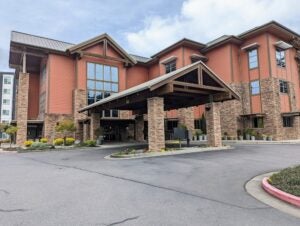
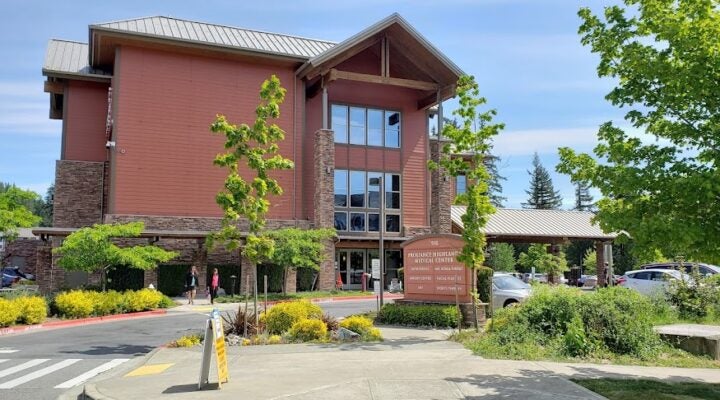
The 43,000-square-foot Proliance Orthopedics and Sports Medicine facility in Issaquah, Wash., supports five operating rooms running five days a week, leaving little margin for disruption. Renovated and occupied in 2008, the building relied on nearly 20-year-old controls that had become increasingly difficult to manage in a way that promoted efficient building operations.
While the facility’s leadership knew a replacement was necessary, they couldn’t afford any downtime or to compromise control of the indoor environment they relied on for daily operations of critical facilities like the surgery center. They soon found their answer in advanced building controls—a solution that could meet their goals while helping the building meet or exceed Washington State’s Clean Building Performance Standards, all without requiring major system upgrades.
BetterBricks sat down with Adam Thordarson, Stage 2 FM’s President and the project lead for the upgrade, to discuss how advanced building controls can help commercial building owners improve performance while reducing capital costs and operational risk.
Starting from the beginning, can you tell us a bit about this project’s origins and what motivated the upgrade?
Initially, the impetus for the project was primarily operational. The old building controls were installed in 2008, so they were ready to be replaced. It was time. The controls were inefficiently programmed, and some of the points throughout the building were not adequately talking to each other. For example, there were two HVAC units running 24 hours a day that didn’t need to be.
However, while this upgrade was a necessity, we also knew it was an excellent opportunity to enhance the indoor environmental comfort and energy efficiency of the building for years to come.
How does upgrading your building’s controls help achieve Washington’s Building Performance Standards?
Upgrading your building controls is an opportunity to meet building performance standards without overhauling your entire building. Building controls offer many entry points to help your building operate more efficiently, including the biggest energy users: HVAC and lighting. By upgrading our building controls, we were able to significantly improve the building’s efficiency to the point that we earned a large incentive from Puget Sound Energy that immediately reduced the project’s upfront costs.
What was your experience with the installation?
Patient and physician comfort was always our top priority. Though the upgrade was required, we couldn’t risk any downtime to any of the five operating rooms that run five days a week. So, building controls changes that required unit downtime had to be done during off hours and weekends, including running a whole new backbone through the building with new points programmed throughout. And because efficiency was a priority, we knew that our team had to have experience with energy efficiency upgrades.
Through careful updated controls sequencing, we were able to accomplish the project ahead of schedule without any downtime to the operating rooms. For a project like this, I highly recommend having your sequencing done by engineers beforehand. It helps things move smoothly and it helps with the incentive approval process.
How are advanced building controls particularly valuable for the healthcare industry?
When you’re working with operating rooms and other sensitive healthcare environments, it’s crucial that your building is calibrated to operate precisely. Everything from temperature and humidity to airflow and air changes per hour are critical to get exactly right to ensure patient, surgeon, and nurse comfort. The new controls maintain indoor conditions in a meticulous way. For example, we included a secondary sensor right above the operating table in each of the operating rooms. This ensures that the temperature and humidity are always perfectly calibrated for the patient and surgery team in their specific operating zone.
Would you recommend advanced building controls for others seeking to achieve building performance standards?
Absolutely. When sequencing is done right, advanced building controls can help building operators make big efficiency wins, especially when major upgrades are unfeasible in other areas. There is a lot of money that can be saved when your building is operating in an optimal way, even if you can’t overhaul the full HVAC system, for example. And there are a ton of options out there, so buildings of different types or with different needs can upgrade their controls and experience these benefits.
Upgrading building controls are one of those rare projects that make everybody happy. The building operates better, it’s more energy efficient, and you save money. After we upgraded the building controls at Proliance, the charge nurse expressed her gratitude at the enhanced comfort and the easy-to-access, easy-to-use controls. She’s on the floor every day experiencing this building, so for her to be happy is the highest compliment we could receive.
Project team
| Project management | Stage 2 Facility Management |
| Controls contractor | ATS Automation |
| Electrician | Static Energy, Inc. |
| Testing and commissioning | Neudorfer Engineers (Integra) |
| Engineering | Solarc Energy Group |