Better buildings, better lives
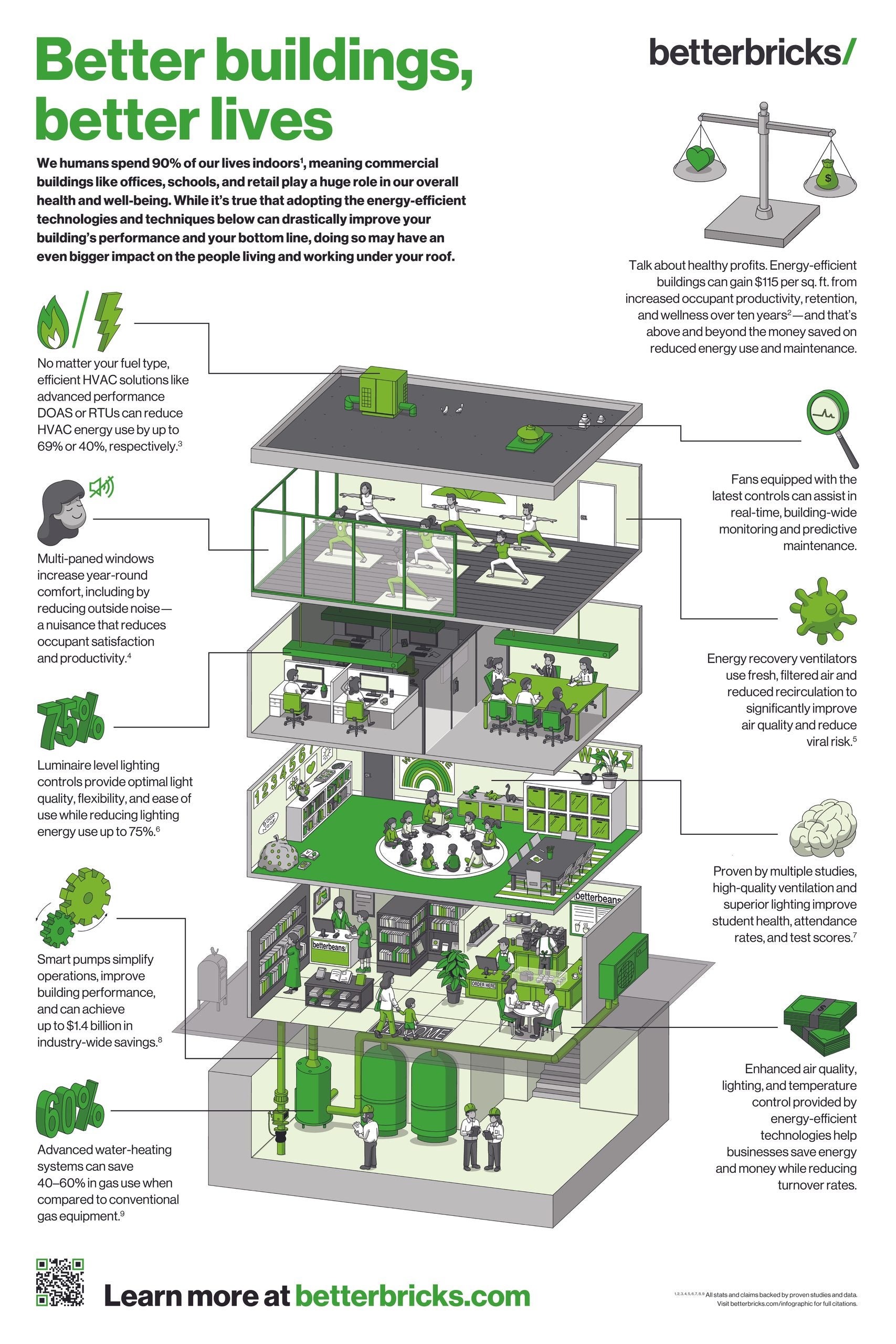
We humans spend 90% of our lives indoors, meaning commercial buildings like offices, schools, and retail play a huge role in our overall health and well-being. While it’s true that adopting the energy-efficient technologies and techniques below can drastically improve your building’s performance and your bottom line, doing so may have an even bigger impact on the people living and working under your roof.
Learn more by exploring the infographic below or downloading the PDF.
[1] N.E. Klepeis et al., “The National Human Activity Pattern Survey (NHAPS): A Resource for Assessing Exposure to Environmental Pollutants,” Journal of Exposure Science and Environmental Epidemiology 11, no. 3 (2001): 231.
[2] Attema JE, SJ Fowell, MJ Macko, and WC Neilson. “The Financial Case for High Performance Buildings.” Stok, LLC, 2018.
[3] Based on performance data from real-world case studies by Northwest Energy Efficiency Alliance.
[4] Oxford Economics, “When the Walls Come Down: How Smart Companies are Rewriting the Rules of the Open Workplace,” 2015.
[5] Northwest Energy Efficiency Alliance, University of Oregon, and Red Car Analytics. “COVID-19 Risk Reduction Strategies and HVAC System Energy Impact,” 2021.
[6] Northwest Energy Efficiency Alliance, “Luminaire Level Lighting Controls Replacement vs Redesign Comparison Study,” 2020.
[7] Joseph G. Allen and John D. Macomber. Healthy Buildings. Harvard University Press, 2020: 18-19.
[8] Savings potential based on Cadeo’s assessment of the U.S. Department of Energy’s “2021 Motor System Market Assessment,” Bonneville Power Administration’s “Adjustable Speed Drive Market Model,” and feedback from subject matter experts.
[9] GTI Energy. HVAC and Water Heating Modeling Study. June 20, 2024.